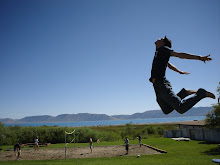
Teens often horse around, but USU Counseling Center Director Mary Doty says being around horses can be good for helping youth with mental and emotional ailments. Horses can help delinquent juveniles interact successfully in society, just as pets in prisons help inmates become more receptive to rehabilitation.
For more information, contact Mary Doty, director, Utah State University Counseling Center, 435-797-1012.
View this Research Matters as it appeared on Utah State Today.
Thursday, August 31, 2006
Tuesday, August 29, 2006
Utah State and U of U Wage Blood Battle
Contact: Leah Enzler, 435-797-1709, leahe@cc.usu.edu
Writer: Jacob Roskelley, 435-797-1719, asusupr@cc.usu.edu
LOGAN — With a goal of collecting 1,000 units of blood and a call for
students to join the “I.V.” League, the fifth annual Blood Battle is
set to begin Monday, Aug. 28 at Utah State University during the
Week of Welcome. Those interested can donate blood from 9 a.m. to
3 p.m. in the International and Sunburst Lounges in the Taggart
Student Center.
The Blood Battle is the annual blood drive competition between Utah
State and the University of Utah. The event is conducted by the
American Red Cross and sponsored by the Associated Students of
Utah State University.
“This is a great opportunity for students to get involved and do some
service,” said Leah Enzler, ASUSU service vice president and Blood
Battle coordinator. “It just takes a little time but it can make a huge
difference in someone’s life.”
The blood collected by the American Red Cross during the Blood
Battle will be used to help people locally in addition to aiding the
international organization in its world-wide humanitarian efforts.
The trophy will be presented to the winning school during half time of
the USU vs. U of U football game at Utah State, Sept. 15. Utah State
is the current Blood Battle champion and has won the competition the
past three years.
The Blood Battle is part of the Week of Welcome, a week full of free
food and activities, allowing blood donors to participate in various
events when they give blood. Other activities include free Famous
Aggie Ice Cream, high stakes bingo, a free movie on the HPER field
and an afternoon of food and entertainment on the quad. For more
information, contact the Student Involvement and Leadership Center
located in the TSC in room 326. Send an e-mail to
involvement@usu.edu or call (435) 797-2912.
#####
View the press release as it appeared in Utah State Today.
Writer: Jacob Roskelley, 435-797-1719, asusupr@cc.usu.edu
LOGAN — With a goal of collecting 1,000 units of blood and a call for
students to join the “I.V.” League, the fifth annual Blood Battle is
set to begin Monday, Aug. 28 at Utah State University during the
Week of Welcome. Those interested can donate blood from 9 a.m. to
3 p.m. in the International and Sunburst Lounges in the Taggart
Student Center.
The Blood Battle is the annual blood drive competition between Utah
State and the University of Utah. The event is conducted by the
American Red Cross and sponsored by the Associated Students of
Utah State University.
“This is a great opportunity for students to get involved and do some
service,” said Leah Enzler, ASUSU service vice president and Blood
Battle coordinator. “It just takes a little time but it can make a huge
difference in someone’s life.”
The blood collected by the American Red Cross during the Blood
Battle will be used to help people locally in addition to aiding the
international organization in its world-wide humanitarian efforts.
The trophy will be presented to the winning school during half time of
the USU vs. U of U football game at Utah State, Sept. 15. Utah State
is the current Blood Battle champion and has won the competition the
past three years.
The Blood Battle is part of the Week of Welcome, a week full of free
food and activities, allowing blood donors to participate in various
events when they give blood. Other activities include free Famous
Aggie Ice Cream, high stakes bingo, a free movie on the HPER field
and an afternoon of food and entertainment on the quad. For more
information, contact the Student Involvement and Leadership Center
located in the TSC in room 326. Send an e-mail to
involvement@usu.edu or call (435) 797-2912.
#####
View the press release as it appeared in Utah State Today.

Thursday, August 17, 2006
Stay Green the Water Wise Way
USU researchers have developed a do-it-yourself water conservation program that can reduce outdoor water usage by up to 50 percent. Using sprinkler performance evaluation catch cups, a homeowner can measure how much water is being applied to an area of lawn and then adjust watering time accordingly.
For more information, contact Kelly Kopp, assistant professor of plants, soils and biometeorolgy, 435-797-1523; or Larry Rupp, department head, plants, soils and biometeorology, 435-797-2099.
View this Research Matters as it appeared in Utah State Today.
For more information, contact Kelly Kopp, assistant professor of plants, soils and biometeorolgy, 435-797-1523; or Larry Rupp, department head, plants, soils and biometeorology, 435-797-2099.
View this Research Matters as it appeared in Utah State Today.
Man's Best Friend Lends a Hand
When life starts raining cats and dogs, it might be a good idea to go out and seek the companionship of one, says USU Counseling Center Director Mary Doty. Interacting with animals can lower high blood pressure and stress as well as decrease depression. Among the elderly, the presence of pets can increase alertness, mobility and speech.
For more information, contact Mary Doty, director, Utah State University Counseling Center, 435-797-1012.
View this Research Matters as it appeared on Utah State Today.
For more information, contact Mary Doty, director, Utah State University Counseling Center, 435-797-1012.
View this Research Matters as it appeared on Utah State Today.
Wednesday, August 2, 2006
White Named Associate Director at Center for Integrated Biosystems
Contact: Kenneth White, 435-797-2149, kwhite@cc.usu.edu
Writer: Jacob Roskelley, 435-797-1350, jacobr@cc.usu.edu
LOGAN - Kenneth White, a Utah State University professor, has been
named associate director for research at the Center for Integrated
BioSystems at Utah State.
The Center for Integrated BioSystems is a research facility serving
agriculture and life sciences. The center also collaborates with and
trains scientists in academia, industry and national laboratories.
White is a professor of reproductive and embryo biology in the
animal, dairy and veterinary sciences department at Utah State.
Most recently, he directed and conducted nuclear transfer work to
produce the first cloned mules in the world.
“Ken’s world-class research and his work with students have had a
profound effect on our university and the academic research
community,” said Noelle Cockett, dean of the College of
Agriculture. “I look forward to many more great things as he takes
on this new position.”
White has authored or co-authored approximately 80 scientific
papers and five book chapters in the area of embryo and
developmental biology. In 2004, he received the Best of State Statue
in Agriculture for his work in cloning.
White replaces Daryll DeWald who has been named head of the
biology department at USU.
#####
View the press release as it appeared in Utah State Today.
View the article in the Herald Journal on August 6, 2006.
Writer: Jacob Roskelley, 435-797-1350, jacobr@cc.usu.edu
LOGAN - Kenneth White, a Utah State University professor, has been
named associate director for research at the Center for Integrated
BioSystems at Utah State.
The Center for Integrated BioSystems is a research facility serving
agriculture and life sciences. The center also collaborates with and
trains scientists in academia, industry and national laboratories.
White is a professor of reproductive and embryo biology in the
animal, dairy and veterinary sciences department at Utah State.
Most recently, he directed and conducted nuclear transfer work to
produce the first cloned mules in the world.
“Ken’s world-class research and his work with students have had a
profound effect on our university and the academic research
community,” said Noelle Cockett, dean of the College of
Agriculture. “I look forward to many more great things as he takes
on this new position.”
White has authored or co-authored approximately 80 scientific
papers and five book chapters in the area of embryo and
developmental biology. In 2004, he received the Best of State Statue
in Agriculture for his work in cloning.
White replaces Daryll DeWald who has been named head of the
biology department at USU.
#####
View the press release as it appeared in Utah State Today.
View the article in the Herald Journal on August 6, 2006.
Tuesday, August 1, 2006
ASUSU Offers an Education Students Won’t Find in a Classroom
You finish a club meeting and meet up with some friends you met at Aggie B.L.U.E. One of your friends reminds you of a service project coming up and asks you if you are going to watch the movie that the Student Activities Board is showing that night. Another friend wants to know if you can help them campaign for student government and asks you if you have found a date for the dance. And this is only Monday.
The best part is you’re having so much fun that you don’t even realize all of the experience you’re picking up along the way. You’re gaining important skills like teamwork, leadership and time management, things that will serve you your entire life.
A complete education, in and out of the classroom, is one of the benefits you’ll find when you choose to attend Utah State. There are countless ways to get involved, meet new people and simply enjoy life on the best residential campus in the Intermountain West. Whether you’re an incoming freshman or a graduate student, the opportunities are waiting for you.
No matter what you want to do, you can do it all. It simply takes a desire to get involved.
Clubs and Activities
Utah State sponsors more than 200 student-run clubs and organizations. Whether you’re interested in intramural sports, honorary societies, religious fellowships or simply hanging out with fun, optimistic people, there is always something for you to do at Utah State. Even if there isn’t already a club for what you want to do, it’s easy to start a new one. In addition, the Student Activities Board plans a wide variety of activities and special events, like concerts, movies and dances like the Howl – Utah State’s famous annual Halloween party.
The HURD
The HURD is Utah State’s brand new spirit club for athletics, club sports and recreation. The HURD was created to promote: involvement in athletics, school spirit, attendance at all athletic events, wearing blue and having fun. There is a $20 fee to join that covers the basic cost to run all of the different programs. With this fee you will receive: an official HURD t-shirt, a discount card to use around Cache Valley, free food at all tailgating and away game parties as well as other events throughout the year. If you are interested in joining please contact Tracey Torman by e-mail at HURD@cc.usu.edu.
Community Service
The Val R. Christensen Service Center is the on campus resource for students who are interested in serving the campus and local community. Whether you’re interested in working with children, the elderly, people with disabilities or just the community in general, there is a service opportunity for you. The center has 16 volunteer programs, such as Best Buddies, Special Olympics, Spanish Ambassadors and many more.
Service-Learning Scholars
Make service and leadership a part of your education. Service-Learning Scholars at Utah State are an elite group of students dedicated to making a difference in their community. Students accepted into this program will earn academic credit for hands-on service-learning experiences. As a Service-Learning Scholar you will apply what you learn in your field of study while addressing issues in your community. To contact Service-Learning, e-mail us at servelearn@cc.usu.edu or call 435-797-2912.
Greek Life
Discover what it means to be Greek, to belong, to serve, to study, to have a great time making memories and life-long friends. Utah State University fraternity and sorority members are part of a community of students and alumni who value character, leadership, scholarship and service. Fraternity and sorority members create a broad network of friends who support and enforce social responsibility. Find your place, be yourself and be a part of something big at Utah State.
Student Government
When students join together, amazing things can happen. That’s the whole idea behind student government. More than most campuses, Utah State students are involved in decisions that affect the university. The Associated Students of Utah State University – otherwise known as ASUSU – is the student voice on campus, focused on continually improving student life at Utah State University. Students participate in student government through the ASUSU Executive Council, the Academic Senate and their respective committees. All that is asked of you is that you never doubt that a small group of thoughtful and committed students can make a difference, because sometimes that’s the only way.
Aggie B.L.U.E.
With a new twist on an old tradition, this year’s fall leadership program will truly be Building Leaders for University Excellence. This annual two day seminar, held August 21st and 22nd, features activities and small-group workshops to teach students about communication, team building, leadership development and more. To register for this amazing experience, please visit http://a-station.usu.edu/aggieblue.cfm by July 31, 2006.
Leadership House
One of Utah State’s themed residential Community Lifestyles, Leadership House is home to almost 70 student leaders who share experiences, build friendships and improve their skills in communication, collaboration and teamwork. Interested? Apply online at www.housing.usu.edu.
Aggie Leadership Academy
Sponsored by the Val R. Christensen Service Center, the Academy provides intense leadership training during overnight retreats each month. For information, go to http://servicecenter.usu.edu/ala.html.
There are many other leadership opportunities at Utah State, sometimes right under your nose. All it takes is a little determination and a lot of enthusiasm to run for club officer, plan an event, or organize an intramural team. Go for it!
Interested? Contact Us.
The Student Involvement and Leadership Center, located in Room 326 of the Taggart Student Center, serves as the clearinghouse for student involvement and leadership opportunities. Call us at 435-797-2912, e-mail us at involvement@cc.usu.edu or check us out on the web at http://a-station.usu.edu. For more information, contact Tiffany Evans, Director, tiffanye@cc.usu.edu.
The best part is you’re having so much fun that you don’t even realize all of the experience you’re picking up along the way. You’re gaining important skills like teamwork, leadership and time management, things that will serve you your entire life.
A complete education, in and out of the classroom, is one of the benefits you’ll find when you choose to attend Utah State. There are countless ways to get involved, meet new people and simply enjoy life on the best residential campus in the Intermountain West. Whether you’re an incoming freshman or a graduate student, the opportunities are waiting for you.
No matter what you want to do, you can do it all. It simply takes a desire to get involved.
Clubs and Activities
Utah State sponsors more than 200 student-run clubs and organizations. Whether you’re interested in intramural sports, honorary societies, religious fellowships or simply hanging out with fun, optimistic people, there is always something for you to do at Utah State. Even if there isn’t already a club for what you want to do, it’s easy to start a new one. In addition, the Student Activities Board plans a wide variety of activities and special events, like concerts, movies and dances like the Howl – Utah State’s famous annual Halloween party.
The HURD
The HURD is Utah State’s brand new spirit club for athletics, club sports and recreation. The HURD was created to promote: involvement in athletics, school spirit, attendance at all athletic events, wearing blue and having fun. There is a $20 fee to join that covers the basic cost to run all of the different programs. With this fee you will receive: an official HURD t-shirt, a discount card to use around Cache Valley, free food at all tailgating and away game parties as well as other events throughout the year. If you are interested in joining please contact Tracey Torman by e-mail at HURD@cc.usu.edu.
Community Service
The Val R. Christensen Service Center is the on campus resource for students who are interested in serving the campus and local community. Whether you’re interested in working with children, the elderly, people with disabilities or just the community in general, there is a service opportunity for you. The center has 16 volunteer programs, such as Best Buddies, Special Olympics, Spanish Ambassadors and many more.
Service-Learning Scholars
Make service and leadership a part of your education. Service-Learning Scholars at Utah State are an elite group of students dedicated to making a difference in their community. Students accepted into this program will earn academic credit for hands-on service-learning experiences. As a Service-Learning Scholar you will apply what you learn in your field of study while addressing issues in your community. To contact Service-Learning, e-mail us at servelearn@cc.usu.edu or call 435-797-2912.
Greek Life
Discover what it means to be Greek, to belong, to serve, to study, to have a great time making memories and life-long friends. Utah State University fraternity and sorority members are part of a community of students and alumni who value character, leadership, scholarship and service. Fraternity and sorority members create a broad network of friends who support and enforce social responsibility. Find your place, be yourself and be a part of something big at Utah State.
Student Government
When students join together, amazing things can happen. That’s the whole idea behind student government. More than most campuses, Utah State students are involved in decisions that affect the university. The Associated Students of Utah State University – otherwise known as ASUSU – is the student voice on campus, focused on continually improving student life at Utah State University. Students participate in student government through the ASUSU Executive Council, the Academic Senate and their respective committees. All that is asked of you is that you never doubt that a small group of thoughtful and committed students can make a difference, because sometimes that’s the only way.
Aggie B.L.U.E.
With a new twist on an old tradition, this year’s fall leadership program will truly be Building Leaders for University Excellence. This annual two day seminar, held August 21st and 22nd, features activities and small-group workshops to teach students about communication, team building, leadership development and more. To register for this amazing experience, please visit http://a-station.usu.edu/aggieblue.cfm by July 31, 2006.
Leadership House
One of Utah State’s themed residential Community Lifestyles, Leadership House is home to almost 70 student leaders who share experiences, build friendships and improve their skills in communication, collaboration and teamwork. Interested? Apply online at www.housing.usu.edu.
Aggie Leadership Academy
Sponsored by the Val R. Christensen Service Center, the Academy provides intense leadership training during overnight retreats each month. For information, go to http://servicecenter.usu.edu/ala.html.
There are many other leadership opportunities at Utah State, sometimes right under your nose. All it takes is a little determination and a lot of enthusiasm to run for club officer, plan an event, or organize an intramural team. Go for it!
Interested? Contact Us.
The Student Involvement and Leadership Center, located in Room 326 of the Taggart Student Center, serves as the clearinghouse for student involvement and leadership opportunities. Call us at 435-797-2912, e-mail us at involvement@cc.usu.edu or check us out on the web at http://a-station.usu.edu. For more information, contact Tiffany Evans, Director, tiffanye@cc.usu.edu.
Wednesday, July 26, 2006
Little Blue Luncheons Bring Healthy Eating Back to School
Contact: Whitney Wilkinson, 435-797-8286, whitney.wilkinson@usu.edu
Writer: Jacob Roskelley, 435-797-1350, jacobr@cc.usu.edu
LOGAN, Utah ─ As parents prepare to send their students back to
school, researchers at Utah State University are implementing
creative and innovative programs that any family can use to teach
children the importance of healthy eating habits and combat the
growing national trend of childhood obesity.
These programs are being developed at the Edith Bowen Laboratory
School, located on the USU campus. University professors,
researchers and students come together at this practicing lab school
to discover and implement the best techniques in educating children.
Its nutrition programs led the U.S. Department of Agriculture to
award it the 2004 Regional Best Practices Award in the “Increasing
Fruits and Vegetables Consumption” category.
“From the lunchroom to the dinner table, our programs teach
students to appreciate nutrition,” said Janet Anderson, a professor
in the dietetics program at Utah State who oversees one of the
nutrition programs at the school. “And we don’t do it with
overcooked school peas or any other typical school lunch menu item.
It truly is a gourmet meal on a typical budget.”
Research-based programs at the school, including the Fruit and
Veggie Fair and the Little Blue Luncheon, contain concepts that
parents can easily apply in their own home. Through their research,
dietitians and professors at Utah State offer practical nutrition tips
to prepare students to go back to school happy, healthy and eager to
learn.
The Fruit and Veggie Fair is an educational and fun event where
children learn the importance of a healthy lifestyle while having a
good time. University dietetics students prepare lessons on the value
of nutrition and present them to the kids. One specific activity allows
children to carve characters out of fruits and vegetables while
learning about the essential vitamins they contain.
The Little Blue Luncheon is a complete formal dining experience
where students learn about and practice healthy eating habits. The
lunch is hosted by the dean of the College of Education and prepared
by university culinary arts students. The kids dress appropriately, use
polite conversation and follow the host’s lead. All of this takes place
with linens, dinner music and creative centerpieces.
Kaye Rhees, principal of the Edith Bowen Laboratory School, said she
is concerned about the nutrition habits of her students and other
students across the nation.
“The rising rate of childhood obesity in this country is frightening,”
Rhees said. “Our school is so fortunate to be a part of such a large
research institution like Utah State, and we want to share the
benefits with anyone we can. Our nutrition programs are specifically
designed to be implemented by any parent in any home.”
#####
View the press release as it appeared on Utah State Today.
View the press release as it appeared on Newswise.
Writer: Jacob Roskelley, 435-797-1350, jacobr@cc.usu.edu
LOGAN, Utah ─ As parents prepare to send their students back to
school, researchers at Utah State University are implementing
creative and innovative programs that any family can use to teach
children the importance of healthy eating habits and combat the
growing national trend of childhood obesity.
These programs are being developed at the Edith Bowen Laboratory
School, located on the USU campus. University professors,
researchers and students come together at this practicing lab school
to discover and implement the best techniques in educating children.
Its nutrition programs led the U.S. Department of Agriculture to
award it the 2004 Regional Best Practices Award in the “Increasing
Fruits and Vegetables Consumption” category.
“From the lunchroom to the dinner table, our programs teach
students to appreciate nutrition,” said Janet Anderson, a professor
in the dietetics program at Utah State who oversees one of the
nutrition programs at the school. “And we don’t do it with
overcooked school peas or any other typical school lunch menu item.
It truly is a gourmet meal on a typical budget.”
Research-based programs at the school, including the Fruit and
Veggie Fair and the Little Blue Luncheon, contain concepts that
parents can easily apply in their own home. Through their research,
dietitians and professors at Utah State offer practical nutrition tips
to prepare students to go back to school happy, healthy and eager to
learn.
The Fruit and Veggie Fair is an educational and fun event where
children learn the importance of a healthy lifestyle while having a
good time. University dietetics students prepare lessons on the value
of nutrition and present them to the kids. One specific activity allows
children to carve characters out of fruits and vegetables while
learning about the essential vitamins they contain.
The Little Blue Luncheon is a complete formal dining experience
where students learn about and practice healthy eating habits. The
lunch is hosted by the dean of the College of Education and prepared
by university culinary arts students. The kids dress appropriately, use
polite conversation and follow the host’s lead. All of this takes place
with linens, dinner music and creative centerpieces.
Kaye Rhees, principal of the Edith Bowen Laboratory School, said she
is concerned about the nutrition habits of her students and other
students across the nation.
“The rising rate of childhood obesity in this country is frightening,”
Rhees said. “Our school is so fortunate to be a part of such a large
research institution like Utah State, and we want to share the
benefits with anyone we can. Our nutrition programs are specifically
designed to be implemented by any parent in any home.”
#####
View the press release as it appeared on Utah State Today.
View the press release as it appeared on Newswise.
Godfrey Becomes First USU Professor to Receive WAEA Award
Contact: Bruce Godfrey, 435-797-2294, bruceg@ext.usu.edu
Writer: Jacob Roskelley, 435-797-1350, jacobr@cc.usu.edu
LOGAN - The Western Agricultural Economics Association awarded
Bruce Godfrey the Distinguished Scholars Award June 30. Godfrey, a
professor in the department of economics, is the first Utah State
University professor to receive the award.
“Bruce is an outstanding teacher and communicator who is equally
effective teaching agricultural producers as he is teaching college
students,” said DeeVon Bailey, the interim head of the economics
department. “There haven’t been many people who have served Utah
State more unselfishly or effectively than he has.”
Godfrey received the award for his work with WAEA and his research
in the area of agricultural economics. His research primarily focuses
on the economics of using public and private lands, including the
taxation of agricultural lands, the designation of federal lands as
wilderness and the preservation of open space lands. His research
has been widely cited and used in Utah and other locations in the
West.
The WAEA is an association of approximately 700 agricultural
economists located throughout the world with interests in the
economics of agriculture in the western United States.
Godfrey was the WAEA president in 2004 and served as secretary and
treasurer from 1995 to 2001. He has also received the E.G. Peterson
Award and was the College of Agriculture’s professor of the year in
2005.
#####
View the press release as it appeared in Utah State Today.
Writer: Jacob Roskelley, 435-797-1350, jacobr@cc.usu.edu
LOGAN - The Western Agricultural Economics Association awarded
Bruce Godfrey the Distinguished Scholars Award June 30. Godfrey, a
professor in the department of economics, is the first Utah State
University professor to receive the award.
“Bruce is an outstanding teacher and communicator who is equally
effective teaching agricultural producers as he is teaching college
students,” said DeeVon Bailey, the interim head of the economics
department. “There haven’t been many people who have served Utah
State more unselfishly or effectively than he has.”
Godfrey received the award for his work with WAEA and his research
in the area of agricultural economics. His research primarily focuses
on the economics of using public and private lands, including the
taxation of agricultural lands, the designation of federal lands as
wilderness and the preservation of open space lands. His research
has been widely cited and used in Utah and other locations in the
West.
The WAEA is an association of approximately 700 agricultural
economists located throughout the world with interests in the
economics of agriculture in the western United States.
Godfrey was the WAEA president in 2004 and served as secretary and
treasurer from 1995 to 2001. He has also received the E.G. Peterson
Award and was the College of Agriculture’s professor of the year in
2005.
#####
View the press release as it appeared in Utah State Today.
Thursday, July 20, 2006
USU Uintah Basin Trend of Community Support Continues
Contacts: Guy Denton, (435) 722-2294, guy.denton@usu.edu
Ronda Menlove, (435) 797-8264, ronda.menlove@usu.edu
Writer: Jacob Roskelley, (435) 797-0810, jacobr@cc.usu.edu
VERNAL - The recent outpouring of community support for Utah State
University Uintah Basin continued July 17 with the announcement of a
$120,000 scholarship gift from Western Petroleum.
Western Petroleum, a Vernal-based company, announced the gift
during a community celebration. This most recent contribution is one
in a growing number of gifts that began early this year with the
$5.3 million land gift from Bob Williams, the second largest private
gift to Utah State.
Perry Taylor, the president of Western Petroleum and a USU alum,
said regional campuses hold great potential and great opportunities.
“When I came back to Vernal to work for my father, Utah State was
there to help me finish my business degree,” said Taylor. “Without
them, my life would be very different. “We wanted to give
something back to the community and felt the most significant gift
we could give was education.”
Utah State President Stan L. Albrecht, who was touring regional
campuses in the Uintah Basin and southern Utah, attended the
community celebration and thanked Western Petroleum.
“We appreciate the many contributions from individuals and
organizations who support Utah State,” Albrecht said. “This recent
surge of local involvement will help students and faculty give back to
the community, continuing the ongoing cycle of service and support.”
USU Uintah Basin offers 51 degree programs and certificates
including associate, bachelor’s, master’s, and doctorate degrees.
Courses are offered at 57 locations and are taught face to face,
online and via interactive broadcast.
“Utah State’s many campuses create a community of students,
faculty and residents who join together to improve the lives of others
as well as their own,” said Ronda Menlove, vice provost for regional
campuses and distance education. “It’s a concept that was born in
Logan and has spread across the state.”
Guy Denton, executive director of the USU Uintah Basin, has watched
the development of the campus and is excited to be a part of its
continued growth.
“This generous donation will directly benefit our students in the
Uintah Basin,” Denton said. “The tremendous support of community
leaders such as Perry Taylor and Bob Williams are laying the
foundation for the scholars of tomorrow.”
The gift will consist of $60,000 for immediate student support. The
remaining funds will be used to start a Western Petroleum
Scholarship Endowment.
#####
View the press release as it appeared in Utah State Today.
Ronda Menlove, (435) 797-8264, ronda.menlove@usu.edu
Writer: Jacob Roskelley, (435) 797-0810, jacobr@cc.usu.edu
VERNAL - The recent outpouring of community support for Utah State
University Uintah Basin continued July 17 with the announcement of a
$120,000 scholarship gift from Western Petroleum.
Western Petroleum, a Vernal-based company, announced the gift
during a community celebration. This most recent contribution is one
in a growing number of gifts that began early this year with the
$5.3 million land gift from Bob Williams, the second largest private
gift to Utah State.
Perry Taylor, the president of Western Petroleum and a USU alum,
said regional campuses hold great potential and great opportunities.
“When I came back to Vernal to work for my father, Utah State was
there to help me finish my business degree,” said Taylor. “Without
them, my life would be very different. “We wanted to give
something back to the community and felt the most significant gift
we could give was education.”
Utah State President Stan L. Albrecht, who was touring regional
campuses in the Uintah Basin and southern Utah, attended the
community celebration and thanked Western Petroleum.
“We appreciate the many contributions from individuals and
organizations who support Utah State,” Albrecht said. “This recent
surge of local involvement will help students and faculty give back to
the community, continuing the ongoing cycle of service and support.”
USU Uintah Basin offers 51 degree programs and certificates
including associate, bachelor’s, master’s, and doctorate degrees.
Courses are offered at 57 locations and are taught face to face,
online and via interactive broadcast.
“Utah State’s many campuses create a community of students,
faculty and residents who join together to improve the lives of others
as well as their own,” said Ronda Menlove, vice provost for regional
campuses and distance education. “It’s a concept that was born in
Logan and has spread across the state.”
Guy Denton, executive director of the USU Uintah Basin, has watched
the development of the campus and is excited to be a part of its
continued growth.
“This generous donation will directly benefit our students in the
Uintah Basin,” Denton said. “The tremendous support of community
leaders such as Perry Taylor and Bob Williams are laying the
foundation for the scholars of tomorrow.”
The gift will consist of $60,000 for immediate student support. The
remaining funds will be used to start a Western Petroleum
Scholarship Endowment.
#####
View the press release as it appeared in Utah State Today.
Wednesday, July 12, 2006
Groundbreaking A 'Great Day for USU Athletics'
 A reiteration of commitment to student athletes is what audience members heard as ground was broken for phase two for the renovation of the Dick Romney Stadium.
The event was held in a tent near Romney Stadium at Utah State University Friday, July 7. Audience members included President Stan Albrecht, Rep. Fred Hunsaker and seven members of the Romney family.
“Today we embark on a 10.5 million dollar renovation which illustrates the commitment of this university to continue the long and outstanding tradition of athletics,” said Randy Spetman, director of athletics. “Today we reinstate our commitment to the future.”
 The project includes a three-story facility that will house a new sports medicine facility, an open lobby, offices for the head trainer and staff, an intern development area and a home locker room that can serve 125 athletes.
“A great university needs, and even demands, a great athletic program,” Albrecht said. “This is a great day for Utah State University athletics.”
Phase one of the project, which was completed in August 2005, included an upgrade to the south plaza with a new ticket office and concessions stand. It has been nearly 40 years since a major renovation of this size has been undertaken at the stadium.
 The project includes a three-story facility that will house a new sports medicine facility, an open lobby, offices for the head trainer and staff, an intern development area and a home locker room that can serve 125 athletes.
“A great university needs, and even demands, a great athletic program,” Albrecht said. “This is a great day for Utah State University athletics.”
Phase one of the project,
 which was completed in August 2005, included an upgrade to the south plaza with a new ticket office and concessions stand. It has been nearly 40 years since a major renovation of this size has been undertaken at the stadium.
View the article as it appeared in Utah State Today.
Famous Aggie Ice Cream Offers ‘Inside Scoop’
Contact: Donald McMahon, 435-797-3644, djm@cc.usu.edu
Writer: Jacob Roskelley, 435-797-1350, jacobr@cc.usu.edu
LOGAN – Thanks to large crowds and enthusiastic support, tours of
Utah State University’s Famous Aggie Ice Cream operation are back.
Tour visitors see how ice cream is made in a 45-minute tour that
ends with a taste of USU’s famous dessert. The store and dairy lab
are located in the Nutrition and Food Sciences building at 750 N.
1200 East. Tours begin Saturday, July 29, at noon and continue
every 45 minutes, with the last tour leaving at 3:45 p.m.
This is the second set of tours of the summer, added following the
response of the 150 people who attended the first event. Future
tours will be on Saturdays and will be scheduled depending on
demand. People interested can drop in or call ahead and make a
reservation for large groups.
The tour starts with a presentation by Randall Bagley, the dairy
laboratory manager, who outlines the process of making ice cream
and shows a short video. Next, the group is taken through the dairy
plant to see the process in action. Finally, the tour ends with an
opportunity for customers to redeem their ticket for a cup of their
favorite flavor of ice cream.
“We are excited about the overwhelming support we received from
the community and are pleased to continue offering these tours,”
said Donald McMahon, director of the dairy lab and professor of
nutrition and food sciences. “They have been a great event and an
excellent opportunity for us to interact more with people. The tours
allow us to show everyone the research that is being done and what
we are all about, plus it’s just a good tasty treat.”
Tour cost is $2 per person. For more information call Famous Aggie
Ice Cream at 435-797-2112.
#####
View the press release as it appeared in Utah State Today.
View the article in the Herald Journal on July 27, 2006.
View the article in Cache Magazine on July 28, 2006.
Writer: Jacob Roskelley, 435-797-1350, jacobr@cc.usu.edu
LOGAN – Thanks to large crowds and enthusiastic support, tours of
Utah State University’s Famous Aggie Ice Cream operation are back.
Tour visitors see how ice cream is made in a 45-minute tour that
ends with a taste of USU’s famous dessert. The store and dairy lab
are located in the Nutrition and Food Sciences building at 750 N.
1200 East. Tours begin Saturday, July 29, at noon and continue
every 45 minutes, with the last tour leaving at 3:45 p.m.
This is the second set of tours of the summer, added following the
response of the 150 people who attended the first event. Future
tours will be on Saturdays and will be scheduled depending on
demand. People interested can drop in or call ahead and make a
reservation for large groups.
The tour starts with a presentation by Randall Bagley, the dairy
laboratory manager, who outlines the process of making ice cream
and shows a short video. Next, the group is taken through the dairy
plant to see the process in action. Finally, the tour ends with an
opportunity for customers to redeem their ticket for a cup of their
favorite flavor of ice cream.
“We are excited about the overwhelming support we received from
the community and are pleased to continue offering these tours,”
said Donald McMahon, director of the dairy lab and professor of
nutrition and food sciences. “They have been a great event and an
excellent opportunity for us to interact more with people. The tours
allow us to show everyone the research that is being done and what
we are all about, plus it’s just a good tasty treat.”
Tour cost is $2 per person. For more information call Famous Aggie
Ice Cream at 435-797-2112.
#####
View the press release as it appeared in Utah State Today.
View the article in the Herald Journal on July 27, 2006.
View the article in Cache Magazine on July 28, 2006.
Thursday, July 6, 2006
The Grass is Always Greener
Turfgrass is the largest irrigated crop in the U.S. and is often over-watered. USU researchers created a program educating residential, commercial and institutional land owners about water use on turfgrass. The program teaches how much water to apply to grass landscapes, how often to apply it and how to apply it evenly.
For more information contact USU Plants, Soils and Biometerology professors Kelly Kopp, 435-797-1523; or Larry Rupp, 435-797-2099.
View this Research Matters as it appeared on Utah State Today.
For more information contact USU Plants, Soils and Biometerology professors Kelly Kopp, 435-797-1523; or Larry Rupp, 435-797-2099.
View this Research Matters as it appeared on Utah State Today.
Friday, June 30, 2006
Three USU Advisers Part of ‘Select Few’
Contact: John Mortensen, 435-797-9303, john.mortensen@usu.edu
Writer: Jacob Roskelley, 435-797-1350, jacobr@cc.usu.edu
LOGAN – The National Academic Advising Association will honor three
Utah State University advisers for their achievements. Doran Baker,
Sally Peterson and Dawn Black will each receive a Certificate of Merit
for Outstanding Advising in their various categories.
“The impact advisers have on our students is astounding,” said John
Mortensen, director of university advising and transfer services.
“There is a direct correlation between good advising and a student’s
academic success. I commend these advisers for their hard work and
congratulate them on receiving such prestigious awards.”
Baker, a professor and faculty adviser in the department of electrical
and computer engineering, is one of 17 faculty advisers in the nation
receiving an award in the faculty academic advising category.
Peterson, an adviser in the College of Humanities Arts and Social
Sciences, is one of seven academic advisers in the nation receiving
an award in the academic advising–primary role category. Black,
an academic adviser in the department of elementary education,
is one of six academic advisers in the nation receiving an award in
the new academic adviser–primary role category.
All three recipients will be honored and presented with their awards
at a reception Wednesday, Oct. 18, in Indianapolis, Ind., during the
annual NACADA conference. NACADA is the largest association for
higher education advisers in the nation.
#####
View the press release as it appeared in Utah State Today.
Writer: Jacob Roskelley, 435-797-1350, jacobr@cc.usu.edu
LOGAN – The National Academic Advising Association will honor three
Utah State University advisers for their achievements. Doran Baker,
Sally Peterson and Dawn Black will each receive a Certificate of Merit
for Outstanding Advising in their various categories.
“The impact advisers have on our students is astounding,” said John
Mortensen, director of university advising and transfer services.
“There is a direct correlation between good advising and a student’s
academic success. I commend these advisers for their hard work and
congratulate them on receiving such prestigious awards.”
Baker, a professor and faculty adviser in the department of electrical
and computer engineering, is one of 17 faculty advisers in the nation
receiving an award in the faculty academic advising category.
Peterson, an adviser in the College of Humanities Arts and Social
Sciences, is one of seven academic advisers in the nation receiving
an award in the academic advising–primary role category. Black,
an academic adviser in the department of elementary education,
is one of six academic advisers in the nation receiving an award in
the new academic adviser–primary role category.
All three recipients will be honored and presented with their awards
at a reception Wednesday, Oct. 18, in Indianapolis, Ind., during the
annual NACADA conference. NACADA is the largest association for
higher education advisers in the nation.
#####
View the press release as it appeared in Utah State Today.
Monday, June 26, 2006
Famous Aggie Ice Cream Now Offering a ‘Behind the Scenes’ Look
Contact: Donald McMahon, 435-797-3644, djm@cc.usu.edu
Writer: Jacob Roskelley, 435-797-1350, jacobr@cc.usu.edu
LOGAN – Visitors to Famous Aggie Ice Cream at Utah State University
can see how ice cream is made in a 45-minute tour that ends with a
taste of the famous dessert. The store and dairy lab are located in
the Nutrition and Food Sciences building at 750 N. 1200 E.
On Saturday, July 1, tours will begin at noon and continue every 45
minutes, with the last tour leaving at 3:45 p.m. Future tours will be
on Saturdays and scheduled depending on demand. People
interested can drop in or call ahead and make a reservation for large
groups. The tour starts with a presentation by Randall Bagley, the
dairy laboratory manager, where he outlines the process of making
ice cream and shows a short video. Next, the group is taken through
the dairy plant to see that process in action. Finally, the tour ends
with an opportunity for customers to redeem their ticket for a cup
of their favorite flavor of ice cream.
“We are excited to start offering these tours again,” said Donald
McMahon, director of the dairy lab and professor of nutrition and
food sciences. “They have been a great event for the community
and an excellent opportunity for us to interact more with people.
The tours allow us to show everyone the research that is being
done and what we are all about, plus it’s just a good tasty treat.”
The cost for the tour is $2 per person. For more information call
Famous Aggie Ice Cream at 435-797-2112.
#####
View the press release as it appeared in Utah State Today.
View the article in the Herald Journal on July 1, 2006.
View the article in Cache Magazine on July 7, 2006.
View the article in Cache Magazine on July 14, 2006.
View the article in the Herald Journal on July 16, 2006.
Writer: Jacob Roskelley, 435-797-1350, jacobr@cc.usu.edu
LOGAN – Visitors to Famous Aggie Ice Cream at Utah State University
can see how ice cream is made in a 45-minute tour that ends with a
taste of the famous dessert. The store and dairy lab are located in
the Nutrition and Food Sciences building at 750 N. 1200 E.
On Saturday, July 1, tours will begin at noon and continue every 45
minutes, with the last tour leaving at 3:45 p.m. Future tours will be
on Saturdays and scheduled depending on demand. People
interested can drop in or call ahead and make a reservation for large
groups. The tour starts with a presentation by Randall Bagley, the
dairy laboratory manager, where he outlines the process of making
ice cream and shows a short video. Next, the group is taken through
the dairy plant to see that process in action. Finally, the tour ends
with an opportunity for customers to redeem their ticket for a cup
of their favorite flavor of ice cream.
“We are excited to start offering these tours again,” said Donald
McMahon, director of the dairy lab and professor of nutrition and
food sciences. “They have been a great event for the community
and an excellent opportunity for us to interact more with people.
The tours allow us to show everyone the research that is being
done and what we are all about, plus it’s just a good tasty treat.”
The cost for the tour is $2 per person. For more information call
Famous Aggie Ice Cream at 435-797-2112.
#####
View the press release as it appeared in Utah State Today.
View the article in the Herald Journal on July 1, 2006.
View the article in Cache Magazine on July 7, 2006.
View the article in Cache Magazine on July 14, 2006.
View the article in the Herald Journal on July 16, 2006.
Thursday, June 15, 2006
USU Earns Top National Conservation Award
Contact: Larry Rupp, 435-797-2099, larry.rupp@usu.edu
Writer: Jacob Roskelley, 435-797-1350, jacobr@cc.usu.edu
LOGAN - Three Utah State University professors received the U.S.
Department of the Interior's Cooperative Conservation Award during
a ceremony June 14 in the Agricultural Science Building on the USU
campus.
The Cooperative Conservation Award was presented to Larry Rupp,
department head of Plants, Soils and Biometeorology; Roger Kjelgren
and Kelly Kopp, professors in the same department. All received the
award for their research and work on urban water conservation
performed in cooperation with Michael Stuver and Fred Liljegren of
the U.S. Bureau of Reclamation's Upper Colorado Region.
"This is a great honor for USU and an accomplishment to work in
conjunction with such fine national researchers on a project that has
real impact," said Brent Miller, USU's vice president for research.
"This research is one example of the hard work being done by
professors and students throughout the university."
Rupp, Kjelgren and Kopp helped implement the Landscape Irrigation
Simplified program that educates residential, commercial and
institutional land owners about water use on turfgrass. The program,
which was supported by congressionally directed funds, teaches how
much water to apply to grass landscapes, how often to apply it and
how to apply it evenly.
"We searched to find an area of water conservation we could study
that would affect the most lives," said Kopp. "That desire led us to
some very interesting research."
The team looked at recent studies showing that turfgrass is the
largest irrigated crop in the United States. Research done by Rupp
and Kjelgren showed that double the amount of water, or more, is
applied to turfgrass than needed.
One of the many criteria of the award was promoting the use of
natural resources in a responsible manner that encourages a healthy
and dynamic economy. The programs created by these professors
provide an opportunity for university graduates, trained in these
principles, to educate professionals and the public about responsible
water usage.
#####
View the press release as it appeared on Utah State Today.
Writer: Jacob Roskelley, 435-797-1350, jacobr@cc.usu.edu
LOGAN - Three Utah State University professors received the U.S.
Department of the Interior's Cooperative Conservation Award during
a ceremony June 14 in the Agricultural Science Building on the USU
campus.
The Cooperative Conservation Award was presented to Larry Rupp,
department head of Plants, Soils and Biometeorology; Roger Kjelgren
and Kelly Kopp, professors in the same department. All received the
award for their research and work on urban water conservation
performed in cooperation with Michael Stuver and Fred Liljegren of
the U.S. Bureau of Reclamation's Upper Colorado Region.
"This is a great honor for USU and an accomplishment to work in
conjunction with such fine national researchers on a project that has
real impact," said Brent Miller, USU's vice president for research.
"This research is one example of the hard work being done by
professors and students throughout the university."
Rupp, Kjelgren and Kopp helped implement the Landscape Irrigation
Simplified program that educates residential, commercial and
institutional land owners about water use on turfgrass. The program,
which was supported by congressionally directed funds, teaches how
much water to apply to grass landscapes, how often to apply it and
how to apply it evenly.
"We searched to find an area of water conservation we could study
that would affect the most lives," said Kopp. "That desire led us to
some very interesting research."
The team looked at recent studies showing that turfgrass is the
largest irrigated crop in the United States. Research done by Rupp
and Kjelgren showed that double the amount of water, or more, is
applied to turfgrass than needed.
One of the many criteria of the award was promoting the use of
natural resources in a responsible manner that encourages a healthy
and dynamic economy. The programs created by these professors
provide an opportunity for university graduates, trained in these
principles, to educate professionals and the public about responsible
water usage.
#####
View the press release as it appeared on Utah State Today.
Monday, February 27, 2006
Internships: Steps to Success
By: Jacob Roskelley
For many Utah State University students, internships that start on the steps of the Capitol are stepping stones to a better future. According to a report released in December by the Utah Foundation, students who complete internships in college are more likely to have full-time jobs and receive higher salaries after graduation.
 "Internships help make the connection between a field of study and its 'real-world' applications," the report stated. "Internships often translate into full-time employment after graduation as well as provide networking opportunities for other job opportunities."
The report also noted that out of the Utah State University graduates from 2004 that completed an internship, 84 percent of them are currently employed full-time. That's in comparison to the 60 percent of USU graduates that didn't do an internship who are currently employed full-time.
One of the programs at USU that has been highly successful is the government internship program offered through the political science department. Randy Simmons, the department head, said USU's reputation is so good that several congressional offices in Washington, D.C., accept USU interns without conducting interviews.
This semester, there are 20 USU students doing various government internships: 12 are in D.C., six are interning with the Utah State Legislature in Salt Lake City and two are working at the First District Court here in Cache Valley. One of the 12 students interning in Washington, D.C., is Amy Noorda.
Noorda, a junior majoring in public relations and agricultural communications, is currently one of six Utah students working as an intern in the office of Senator Orrin Hatch, R-Utah.
Noorda said choosing to intern in Washington, D.C., was the best choice that she ever made.
"When you get to see a bill being made and passed into law, when you get to see a Supreme Court Justice being questioned and interviewed and found worthy to sit with the highest court in the land, you get a whole new perspective on our nation and our government," Noorda said.
Noorda said she has been assigned to work with the press secretary who handles all media relations for the senator. Because Hatch sits on the Judiciary Committee, Noorda said she has been actively involved with the recent nomination and confirmation of Justice Samuel Alito to the Supreme Court.
She said her other responsibilities included writing letters to constituents, attending meetings and hearings to brief other staffers at a later time, running errands and other various office jobs.
As an intern, Noorda is also expected to give tours of the capitol building, she said, and it is actually the best part of her job. Noorda also said that Washington, D.C., is such an interesting city that she is kept busy outside of work as well.
"There is a ton of history here, so there is always something to see and do," Noorda said. "You won't just be sitting on the couch every night and weekend."
Another USU student that is interning in Washington, D.C., is Jon Cox, a senior majoring in journalism and communications, with an emphasis in print media. Cox is one of four Utah students working in Senator Bob Bennett's, R-Utah, Washington, D.C., office this semester.
"Each semester, Utah students join my D.C. office for an intensive study of how government works. While providing assistance to my staff, they also gain valuable experiences that will impact their futures," Bennett said. "I am certain this semester will prove beneficial to these four bright students as they move through their careers."
Students that are chosen for internships in D.C. live in housing that is currently being leased by the university.
USU is leasing five apartments that are 20 minutes from Capitol Hill in Washington, D.C. Downstairs in the apartment building is an underground mall with shops and restaurants, including a McDonald's.
The success of the program also helps raise money for future students interested in taking an internship in D.C.
AT&T recently donated $10,000 that will directly assist the internship program in the political science department. Simmons accepted the check and thanked AT&T for the donation.
"This donation provides a serious boost to our students," Simmons said. "This may help with a month's rent or travel expenses. This additional financial assistance might make the difference in a student's ability to participate in the internship program."
The check was presented on behalf of AT&T by L.J. Godfrey, a former USU intern, at a formal luncheon at Hamilton's Steak House. Cindy Nielsen accepted the check along with Simmons and President Stan Albrecht. Nielsen is the program administrator for the Institute of Political Economy, which coordinates intern activities out of USU.
Simmons said the donation is very important because the political science internship program, unlike other programs of its kind, doesn't have an endowment to assist with student expenses.
A recent press release from the political science department reported that over the past four years, 139 interns have been sent to Washington, D.C. Of those, 56 went on to accept jobs in the D.C. area.
-jacobr@cc.usu.edu
View the article as it appeared in the Utah Statesman.
For many Utah State University students, internships that start on the steps of the Capitol are stepping stones to a better future. According to a report released in December by the Utah Foundation, students who complete internships in college are more likely to have full-time jobs and receive higher salaries after graduation.
 "Internships help make the connection between a field of study and its 'real-world' applications," the report stated. "Internships often translate into full-time employment after graduation as well as provide networking opportunities for other job opportunities."
The report also noted that out of the Utah State University graduates from 2004 that completed an internship, 84 percent of them are currently employed full-time. That's in comparison to the 60 percent of USU graduates that didn't do an internship who are currently employed full-time.
One of the programs at USU that has been highly successful is the government internship program offered through the political science department. Randy Simmons, the department head, said USU's reputation is so good that several congressional offices in Washington, D.C., accept USU interns without conducting interviews.
This semester, there are 20 USU students doing various government internships: 12 are in D.C., six are interning with the Utah State Legislature in Salt Lake City and two are working at the First District Court here in Cache Valley. One of the 12 students interning in Washington, D.C., is Amy Noorda.
Noorda, a junior majoring in public relations and agricultural communications, is currently one of six Utah students working as an intern in the office of Senator Orrin Hatch, R-Utah.
Noorda said choosing to intern in Washington, D.C., was the best choice that she ever made.
"When you get to see a bill being made and passed into law, when you get to see a Supreme Court Justice being questioned and interviewed and found worthy to sit with the highest court in the land, you get a whole new perspective on our nation and our government," Noorda said.
Noorda said she has been assigned to work with the press secretary who handles all media relations for the senator. Because Hatch sits on the Judiciary Committee, Noorda said she has been actively involved with the recent nomination and confirmation of Justice Samuel Alito to the Supreme Court.
She said her other responsibilities included writing letters to constituents, attending meetings and hearings to brief other staffers at a later time, running errands and other various office jobs.
As an intern, Noorda is also expected to give tours of the capitol building, she said, and it is actually the best part of her job. Noorda also said that Washington, D.C., is such an interesting city that she is kept busy outside of work as well.
"There is a ton of history here, so there is always something to see and do," Noorda said. "You won't just be sitting on the couch every night and weekend."
Another USU student that is interning in Washington, D.C., is Jon Cox, a senior majoring in journalism and communications, with an emphasis in print media. Cox is one of four Utah students working in Senator Bob Bennett's, R-Utah, Washington, D.C., office this semester.
"Each semester, Utah students join my D.C. office for an intensive study of how government works. While providing assistance to my staff, they also gain valuable experiences that will impact their futures," Bennett said. "I am certain this semester will prove beneficial to these four bright students as they move through their careers."
Students that are chosen for internships in D.C. live in housing that is currently being leased by the university.
USU is leasing five apartments that are 20 minutes from Capitol Hill in Washington, D.C. Downstairs in the apartment building is an underground mall with shops and restaurants, including a McDonald's.
The success of the program also helps raise money for future students interested in taking an internship in D.C.
AT&T recently donated $10,000 that will directly assist the internship program in the political science department. Simmons accepted the check and thanked AT&T for the donation.
"This donation provides a serious boost to our students," Simmons said. "This may help with a month's rent or travel expenses. This additional financial assistance might make the difference in a student's ability to participate in the internship program."
The check was presented on behalf of AT&T by L.J. Godfrey, a former USU intern, at a formal luncheon at Hamilton's Steak House. Cindy Nielsen accepted the check along with Simmons and President Stan Albrecht. Nielsen is the program administrator for the Institute of Political Economy, which coordinates intern activities out of USU.
Simmons said the donation is very important because the political science internship program, unlike other programs of its kind, doesn't have an endowment to assist with student expenses.
A recent press release from the political science department reported that over the past four years, 139 interns have been sent to Washington, D.C. Of those, 56 went on to accept jobs in the D.C. area.
-jacobr@cc.usu.edu
View the article as it appeared in the Utah Statesman.
Wednesday, February 1, 2006
Ray B. West One of the 'Least-Prepared' Buildings on USU Campus if Earthquake Hit
By: Jacob Roskelley
According to Utah State's emergency operations plan, there is "a high probability for serious damage as a result of future strong earthquakes" in Cache Valley.
The plan identifies at least two faults that extend north and south along the west side of Cache Valley and two more faults that run north and south to the east.
In 2000, Ed Brinck, the architectural and engineering coordinator for Campus Planning, identified the Ray B. West Building as one of the least-prepared buildings on campus for an earthquake.
Contemplating these facts leaves many students wondering if Utah State is prepared for such an event.
Judy Crockett, the dispatch coordinator for the USU police department, said students and faculty members need to be thinking about what they would do in an earthquake.
"We've got so many different angles that we need to cover," Crockett said.
Crockett has been with the department since 1986 and has been chosen as the university's new emergency management coordinator. Crockett said she is replacing Lynn Wright, who retired at the end of last year, but due to budget cuts, she will not formally hold her new title until July of this year.
Crockett said she has taken numerous classes through the Federal Emergency Management Agency and the Utah Department of Public Safety. She even attended a terrorism class at the Emergency Management Institute in Maryland, she said. In this class, she said she was trained with scenarios specific to USU. In one scenario, she said they had a big screen running news broadcasts and there was a picture of the Veterinary Science Building with a big explosion coming out of its side.
Crockett said she hopes to put all of this experience to good use here at USU.
"My main goal is that I want people to think," she said. "There are so many different scenarios, but a lot of it boils down to good old common sense."
According to the University of Utah seismograph station's Web site, www.seis.utah.edu, there are about 700 earthquakes, including aftershocks, in the Utah region each year. Only 2 percent of these are actually felt. The site also warns people not to worry only about large earthquakes causing damage since even a moderate earthquake can cause major damage.
The last major earthquake to hit Cache Valley was Aug. 30, 1962. It was located north of Richmond on the Utah-Idaho border and it had a magnitude of 5.7. According to an article that ran in the Herald Journal the next day, there was extensive damage in the Skyroom of the Student Union Building, now the Taggart Student Center, and there was a crack in the main tower on the north wall of Old Main.
Now, more than 43 years later, Crockett said USU is prepared for similar situations and there is a plan in place.
The university's emergency operations plan was last revised in early 2003. The plan says it "identifies both natural and man-made hazards which may impact the campus community. It details the response and recovery procedures that campus officials should follow if a disaster strikes."
The plan assesses the possible dangers of an earthquake, but the only specific reference in the body of the text to an earthquake is advising officials to make sure the terrace parking lot is evacuated following an earthquake. Crockett said that updating the plan is one of her goals.
"The plan needs to be more specific, but I don't want to make it so cumbersome that nobody will read it," Crockett said. "I'm working on making it thorough but simple."
She also said students need to work on the "little things" like 72-hour kits.
Alesia Semborski, a senior in marketing, admitted to not having a 72-hour kit.
"I worry about earthquakes, but I don't consciously think about them on a daily basis like I would a car accident," Semborski said.
Crockett said she realizes that students don't have a lot of money. It just needs to be something small that someone could grab in case of an emergency, she said.
"There are a lot of things that you could get a t a dollar store and put in a garbage bag," Crockett said.
Overall, Crockett said she realizes there is a lot to do, but she said no matter what, "we need to be doing something."
-jacobr@cc.usu.edu
View the article as it appeared in the Utah Statesman.
According to Utah State's emergency operations plan, there is "a high probability for serious damage as a result of future strong earthquakes" in Cache Valley.
The plan identifies at least two faults that extend north and south along the west side of Cache Valley and two more faults that run north and south to the east.
In 2000, Ed Brinck, the architectural and engineering coordinator for Campus Planning, identified the Ray B. West Building as one of the least-prepared buildings on campus for an earthquake.
Contemplating these facts leaves many students wondering if Utah State is prepared for such an event.
Judy Crockett, the dispatch coordinator for the USU police department, said students and faculty members need to be thinking about what they would do in an earthquake.
"We've got so many different angles that we need to cover," Crockett said.
Crockett has been with the department since 1986 and has been chosen as the university's new emergency management coordinator. Crockett said she is replacing Lynn Wright, who retired at the end of last year, but due to budget cuts, she will not formally hold her new title until July of this year.
Crockett said she has taken numerous classes through the Federal Emergency Management Agency and the Utah Department of Public Safety. She even attended a terrorism class at the Emergency Management Institute in Maryland, she said. In this class, she said she was trained with scenarios specific to USU. In one scenario, she said they had a big screen running news broadcasts and there was a picture of the Veterinary Science Building with a big explosion coming out of its side.
Crockett said she hopes to put all of this experience to good use here at USU.
"My main goal is that I want people to think," she said. "There are so many different scenarios, but a lot of it boils down to good old common sense."
According to the University of Utah seismograph station's Web site, www.seis.utah.edu, there are about 700 earthquakes, including aftershocks, in the Utah region each year. Only 2 percent of these are actually felt. The site also warns people not to worry only about large earthquakes causing damage since even a moderate earthquake can cause major damage.
The last major earthquake to hit Cache Valley was Aug. 30, 1962. It was located north of Richmond on the Utah-Idaho border and it had a magnitude of 5.7. According to an article that ran in the Herald Journal the next day, there was extensive damage in the Skyroom of the Student Union Building, now the Taggart Student Center, and there was a crack in the main tower on the north wall of Old Main.
Now, more than 43 years later, Crockett said USU is prepared for similar situations and there is a plan in place.
The university's emergency operations plan was last revised in early 2003. The plan says it "identifies both natural and man-made hazards which may impact the campus community. It details the response and recovery procedures that campus officials should follow if a disaster strikes."
The plan assesses the possible dangers of an earthquake, but the only specific reference in the body of the text to an earthquake is advising officials to make sure the terrace parking lot is evacuated following an earthquake. Crockett said that updating the plan is one of her goals.
"The plan needs to be more specific, but I don't want to make it so cumbersome that nobody will read it," Crockett said. "I'm working on making it thorough but simple."
She also said students need to work on the "little things" like 72-hour kits.
Alesia Semborski, a senior in marketing, admitted to not having a 72-hour kit.
"I worry about earthquakes, but I don't consciously think about them on a daily basis like I would a car accident," Semborski said.
Crockett said she realizes that students don't have a lot of money. It just needs to be something small that someone could grab in case of an emergency, she said.
"There are a lot of things that you could get a t a dollar store and put in a garbage bag," Crockett said.
Overall, Crockett said she realizes there is a lot to do, but she said no matter what, "we need to be doing something."
-jacobr@cc.usu.edu
View the article as it appeared in the Utah Statesman.
Wednesday, January 18, 2006
Election Packets Available Now
By: Jacob Roskelley
With goals set, the theme picked and elections quickly approaching, packets are now available for students wanting to run for positions on the Associated Students of Utah State University Executive Council.
The theme for this year's election is "we want you."
Students said they appreciate the annual elections because peer representation at the university is a necessity."
It's good to have someone like me out there who has a little bit of say," said Emma Frost, a senior majoring in fine arts.
But while students say they understand the importance of student government positions, voter turnout has been relatively low in recent years.
According to records kept by former election committee chairs, voter turnout has decreased over the past few years and so has the number of candidates running for office. Holly Scott, the ASUSU public relations director, said she hopes to reverse those trends.
Scott said the reason she hopes to increase voter turnout is because that would mean that "the students on campus are really having a say in who they want to be their voice." Another goal she has is to get candidates that are qualified and who will do a good job once in office, she said.
In order to reach these goals, Scott said she is planning on posting more signs and posters around campus to make students aware of elections. Making students aware of who is running, on the other hand, is up to the candidates themselves, she said. Scott hopes that candidates can help students realize the importance of the ASUSU Executive Council.
"The Executive Council affects students," Scott said, "because they are the ones that are able to voice opinions and they have the authority to get the ball rolling."
Logan Ipsen, a junior majoring in animal science, said he is planning on running for Agriculture senator. He said he has traveled and met with students and representatives of other universities from around the country."
My pride as an Aggie has increased and has built a desire to represent the agriculture student body," Ipsen said.
Election packets can be picked up in the Student Involvement Center located in the Taggart Student Center Room 326. The packets include a list of important dates, a declaration of candidacy form, a list of offices available, the election by-laws, a food policy form and a list of frequently asked questions.
Some of the information found in the packet is as follows: A $20 filing fee is required and is used to offset costs for receptions, advertising for elections and for publication costs. The offices available include ASUSU president and various vice presidents and senators. The filing deadline is Feb. 13 at 3 p.m.
Those that want to be kept informed about elections and the candidates that are running should keep their eyes open, Scott said. Students should check ASUSU's Web site (a-station.usu.edu) for updates. Paying attention to posters and taking the time to meet candidates around the campus are other good ways to stay informed, she said.
Scott said she has also made minor changes and clarifications to the election by-laws to make sure that there is no confusion or ambiguity. She hopes that her efforts will help make this year's elections a success, she said.
"From my perspective," Scott said, "I just want elections to run smoothly."
-jacobr@cc.usu.edu
View the article as it appeared in the Utah Statesman.
With goals set, the theme picked and elections quickly approaching, packets are now available for students wanting to run for positions on the Associated Students of Utah State University Executive Council.
The theme for this year's election is "we want you."
Students said they appreciate the annual elections because peer representation at the university is a necessity."
It's good to have someone like me out there who has a little bit of say," said Emma Frost, a senior majoring in fine arts.
But while students say they understand the importance of student government positions, voter turnout has been relatively low in recent years.
According to records kept by former election committee chairs, voter turnout has decreased over the past few years and so has the number of candidates running for office. Holly Scott, the ASUSU public relations director, said she hopes to reverse those trends.
Scott said the reason she hopes to increase voter turnout is because that would mean that "the students on campus are really having a say in who they want to be their voice." Another goal she has is to get candidates that are qualified and who will do a good job once in office, she said.
In order to reach these goals, Scott said she is planning on posting more signs and posters around campus to make students aware of elections. Making students aware of who is running, on the other hand, is up to the candidates themselves, she said. Scott hopes that candidates can help students realize the importance of the ASUSU Executive Council.
"The Executive Council affects students," Scott said, "because they are the ones that are able to voice opinions and they have the authority to get the ball rolling."
Logan Ipsen, a junior majoring in animal science, said he is planning on running for Agriculture senator. He said he has traveled and met with students and representatives of other universities from around the country."
My pride as an Aggie has increased and has built a desire to represent the agriculture student body," Ipsen said.
Election packets can be picked up in the Student Involvement Center located in the Taggart Student Center Room 326. The packets include a list of important dates, a declaration of candidacy form, a list of offices available, the election by-laws, a food policy form and a list of frequently asked questions.
Some of the information found in the packet is as follows: A $20 filing fee is required and is used to offset costs for receptions, advertising for elections and for publication costs. The offices available include ASUSU president and various vice presidents and senators. The filing deadline is Feb. 13 at 3 p.m.
Those that want to be kept informed about elections and the candidates that are running should keep their eyes open, Scott said. Students should check ASUSU's Web site (a-station.usu.edu) for updates. Paying attention to posters and taking the time to meet candidates around the campus are other good ways to stay informed, she said.
Scott said she has also made minor changes and clarifications to the election by-laws to make sure that there is no confusion or ambiguity. She hopes that her efforts will help make this year's elections a success, she said.
"From my perspective," Scott said, "I just want elections to run smoothly."
-jacobr@cc.usu.edu
View the article as it appeared in the Utah Statesman.
Subscribe to:
Comments (Atom)